Starting a yoga practice can be easier with the right mat. For beginners, comfort, grip, and durability matter most to build confidence and prevent slips. The following selections emphasize cushioning, non-slip surfaces, and easy care—all important when you’re just getting into poses and flows. Below you’ll find five well-suited mats with clear features to compare at a glance and detailed product sections to help you choose the best match for your routine.
| Product | Brand | Thickness | Key Benefit |
|---|---|---|---|
| Amazon Basics 1/2 Inch Extra Thick | Amazon Basics | 1/2 inch | Thick cushioning and textured surface for traction |
| Gaiam Essentials Thick Yoga Mat | Gaiam | 2/5 inch (10mm) | Joint comfort and cushioned support |
| Fitvids 1/2-Inch High Density | Fitvids | 1/2 inch | Dual-sided grip for stability |
| Gruper Eco Friendly 6mm | Gruper | 6mm | Non-slip texture and double-layer design |
| NewMe Fitness 5mm | NewMe Fitness | 5mm | Pose guides and PVC-free elements |
Each mat below is evaluated for comfort, grip, durability, and ease of maintenance—key factors for beginners who want a reliable and welcoming practice space.
Amazon Basics 1/2 Inch Extra Thick Yoga Mat

The Amazon Basics mat offers substantial padding with a half-inch thickness, designed to cushion joints during floor-based yoga and light workouts. Its textured surface helps with traction, reducing the risk of slipping on smooth floors. The durable foam construction provides enough flexibility to rebound after each pose, which is useful as you explore balance and alignment. This mat is a practical option for beginners who want comfort without a heavy or complex setup.
Gaiam Essentials Thick Yoga Mat
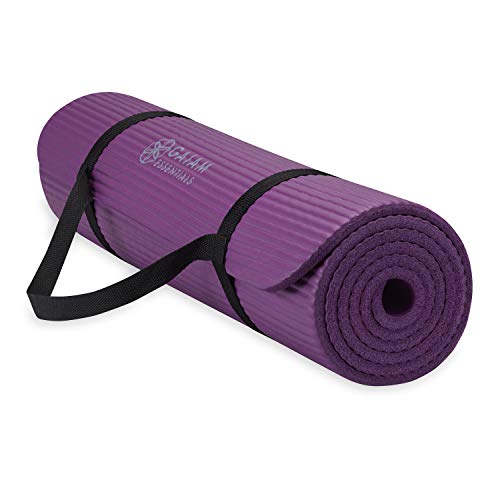
This mat features 10mm thick cushioning designed for joint comfort on hard floors, an excellent match for beginners focusing on gentle, low-impact routines. Its textured surface helps reduce slipping, providing a controlled practice as you work through poses and transitions. Made from low-odor foam, it’s easy to maintain, with a simple wipe-down after sessions. Note that the odor may fade after airing out. The overall feel prioritizes comfort and stability for new yogis.
Fitvids 1/4-Inch High Density Yoga Mat

The Fitvids mat provides a robust 1/2-inch core of high-density foam for spine, hip, knee, and elbow comfort. It features a dual-sided non-slip surface for reliable traction during poses and transitions, which is especially helpful when learning alignment or balancing postures. The durability and moisture-resistance of the mat make maintenance straightforward, ensuring a hygienic practice space after workouts.
Gruper Eco Friendly Yoga Mat

Gruper emphasizes eco-friendly materials with a non-slip texture on both sides for reliable grip. The mat offers two thickness options and a double-layer structure designed to resist tearing and deformation, which helps maintain consistent traction during longer sessions. The mat’s larger dimensions and sturdy surface support a wide range of beginner routines, from basic stretching to introductory flow sequences.
NewMe Fitness Yoga Mat for Women and Men

NewMe Fitness offers a sizeable mat with a 5mm thickness that combines space for movement with comfortable cushioning. It features printed yoga poses on the surface to help beginners orient themselves during practice, eliminating the need to constantly reference a phone or video. The PVC composition is noted to be BPA and phthalate-free, contributing to a healthier option for home use and hot yoga environments where moisture management matters.
Buying Guide: Key Purchase Considerations for Beginners
- Thickness and cushioning: Beginners often benefit from more cushioning to protect joints, typically in the 5–10mm range. Heavier mats provide stability for first poses, while extremely thick mats may impact balance in standing postures.
- Grip and texture: A non-slip surface prevents sliding on slick floors. Mats with textured or sticky surfaces help maintain traction during transitions and balance-focused poses.
- Material and odor: Some mats use rubber, PVC, or foam. Low-odor options are preferable for sensitive users. Note that some foams may emit a temporary smell that fades with airing out.
- Durability and maintenance: Look for mats that are easy to clean and resist tearing or permanent indentations from long sessions. Moisture-wicking properties are beneficial for hot or sweaty practices.
- Portability and care: Carriers, straps, and lightweight designs help with transport to classes or outdoor sessions. Wipe-down cleaning and occasional deeper cleaning extend mat life.
- Size and compatibility: Consider width and length to ensure comfortable coverage for stretches and poses. Taller practitioners may prefer longer mats to accommodate full extension.
- Environmental and health considerations: Some mats emphasize eco-friendly materials or free-from toxins. This may influence long-term usage for sensitive users or households with kids.
- Value and upgrade path: For beginners, starting with a mid-range mat that balances cushion, grip, and durability allows you to assess needs before upgrading to premium options.
When choosing, consider trying a mat that blends cushioning with a secure grip, as this combination most directly supports new practitioners learning alignment and stability. If you practice on hard floors or in a cooler environment, prioritize thicker cushioning and a surface with good traction. For hot or humid settings, moisture resistance and easy cleaning are advantageous to maintain hygiene and grip throughout sessions.