Finding a treadmill that fits taller users requires attention to belt length, overall deck size, handrail height, and sturdy support. The following selections are tailored for taller runners and walkers, offering longer running surfaces, higher weight capacities, and features that reduce discomfort during extended workouts. Each option balances incline range, motor power, and interactive features to support diverse training goals—from uphill intervals to endurance runs.
The table below provides a quick snapshot of five treadmills commonly favored by taller users. Review each model’s belt dimensions, incline capabilities, weight capacity, and key technologies to determine the best fit for your home gym setup.
| Product | Belt Size (approx) | Incline Range | Weight Capacity | |
|---|---|---|---|---|
| CIIHI Treadmill With Auto Incline | 43.31″ x 16.93″ | 0–15% | 400 lbs | Unknown (APP/Voice control) |
| NordicTrack T Series 10 Treadmill | Running area not specified in brief | 0–12% | High (professional-grade construction) | Unknown |
| THERUN Incline Treadmill | Unknown | 0–15% | 300 lbs | 3.5 HP |
| WELLFIT Incline Treadmill | 18″ x 43.5″ | 0–?% Incline | 375 lbs | 3.5 HP |
| HUAGEED Incline Treadmill | 18.90″ belt width (approx) | 0–18% | 400 lbs | 3.5 HP |
Note: Specifications vary by model and production run. When choosing, focus on overall deck length and belt width, the stability of the frame, and how incline features align with tall-user workouts such as long-distance runs or hill training. The following sections dive into five models that best address these considerations, highlighting features and potential trade-offs for taller athletes.
CIIHI Treadmill With Auto Incline

The CIIHI model supports a substantial 15% auto incline and a wide belt for taller runners, with adjustable handrail heights that help maintain proper posture during long workouts. It integrates with mobile apps and voice control, allowing hands-free adjustments for speed, incline, and workout programs. The foldable design adds storage flexibility in smaller spaces. A 400 lbs weight capacity supports heavier trainees and reduces concerns about stability during higher-intensity sessions. The combination of incline versatility and a broader running surface makes it a strong option for tall users prioritizing incline training and customizable workouts.
Pros for tall users:
- Longer, wider running belt supports longer strides.
- Adjustable handrails improve balance across different heights.
- Wide incline range accommodates various training plans without compromising stability.
Trade-offs to consider:
- Non-specified motor horsepower may affect top-end sprint performance for very tall runners seeking high-speed sessions.
- Foldable design can introduce a bit less rigidity compared with premium non-folding frames at high speeds.
NordicTrack T Series 10 Treadmill
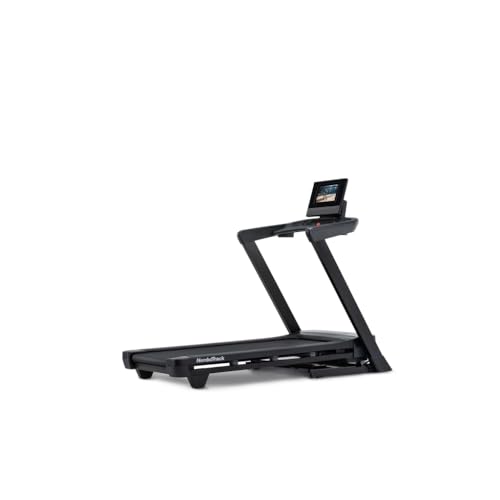
The NordicTrack T Series 10 emphasizes a generous 10-inch tilting touchscreen that helps tall users maintain proper ergonomics during long sessions. It supports speeds up to 12 MPH and incline up to 12%, which aligns with many training programs including hill repeats and tempo runs. The tilt feature keeps the screen at a usable angle while you push through workouts and helps with form monitoring. While the exact belt dimensions weren’t listed, NordicTrack’s reputation for robust frames and sturdy decks suits athletes who require reliability for extended use.
Key considerations for taller runners:
- The height-adjustable screen reduces neck strain during endurance runs.
- Smart integration with iFIT can tailor workouts to your goals, including hill simulations.
THERUN Incline Treadmill

THERUN offers a solid 3.5 HP motor with a 0–15% auto incline and a belt designed to handle regular long-distance workouts. The treadmill emphasizes a quiet operation profile, complemented by dual shock absorption for comfort during longer sessions. An app and Bluetooth connectivity provide workout tracking and route selection through smart devices. With a 300 lbs capacity, it remains a practical option for many athletes, particularly those seeking a balance between incline variety and overall value.
Important insights for tall users:
- Moderate weight capacity can be adequate if you fall within the mid-to-upper range of user weights.
- Active cushioning and multiple speed levels support longer, lower-impact sessions.
WELLFIT Incline Treadmill

The WELLFIT model emphasizes a spacious running deck (18″ x 43.5″) with an emphasis on cushioning via multilayer belts and multiple shock absorbers for joint protection during longer workouts. A 3.5 HP motor supports speeds up to 8.6 MPH, which covers most endurance and incline sessions rather than fast sprint work. The treadmill includes a smart app with voice control and Kinomap compatibility, offering interactive routes and programs without subscription fees. Its foldable design helps conserve space while still offering a large deck when in use.
Why tall users might prefer WELLFIT:
- Large running area supports longer strides and more comfortable positioning for tall athletes.
- Strong cushioning plus adequate incline to simulate varied terrain without compromising form.
HUAGEED Incline Treadmill

HUAGEED focuses on an impressive 18% auto incline, a robust 400 lbs capacity, and a wide belt at about 18.9 inches. The foldable design and Bluetooth capabilities, along with an app and speaker, align with users who want an engaging, tech-enabled workout at home. The 3.5 HP motor supports speeds up to 12 MPH, enabling both walking and running workouts at higher incline levels. For taller athletes, the extended incline range and wide deck contribute to more realistic hill simulations and comfortable stride patterns during longer sessions.
Considerations for taller users:
- Wide belt and high incline enable more natural leg extension on steep hills.
- Sturdy 400 lbs capacity supports heavier athletes while maintaining stability.
Buying Guide: Key Purchase Considerations For Tall Runners
Deck length and belt width are primary factors for tall users. A longer running surface reduces the risk of toeing off the front during long strides, while a wider belt enhances balance and comfort. Weight capacity matters for durability, particularly at higher speeds and inclines. A sturdy frame and solid motor help ensure stability and smooth operation over time.
- Deck dimensions: Look for belts longer than 40 inches and widths around 16–18 inches or more to accommodate longer strides.
- Incline range: A robust incline range (0–12% or higher) supports varied training like hill intervals and endurance climbs.
- Motor and speed: A motor of 3.0 HP or higher with speeds up to at least 10–12 MPH helps taller runners perform a wide range of workouts.
- Frame construction: A heavy-duty, non-folding frame can offer greater rigidity for high-speed runs; folding models are acceptable if they maintain stability and have good locking mechanisms.
- Comfort features: Adjustable handlebars or ergonomic grips, shock absorption, and proper cushioning protect joints on longer sessions.
- Technology: App compatibility, Bluetooth connectivity, and interactive workouts can enhance motivation and training variety.
- Assembly and space: Consider whether you need quick setup or space-saving folding design for your room layout.
In choosing, weigh your priorities—whether you value the longest possible belt for stride comfort, the widest incline for hill training, or the strongest frame for durability—and match these to the space you have at home and the types of workouts you perform most often.