The following overview highlights five treadmills that align with sprint-focused workouts. Each option emphasizes speed, incline variation, durability, and space considerations for home use. Read on to compare features, build quality, and how each model supports sprint intervals, acceleration work, and recovery runs.
Summary Table of Chosen Products
- RongLe Curved Treadmill — Non-electric, self-generated speed, compact storage
- Renestar Treadmill for Home — 25% auto incline, large running area, touchscreen
- Walking Pad with Incline (Wildroot Organic) — Portable, handles, incline for small spaces
- Horizon Fitness 7.0AT Treadmill — Heavy‑duty build, app compatibility, built‑in features
- NordicTrack T 6.5 S — SpaceSaver design, incline, and iFIT compatibility
RongLe Curved Treadmill For Non-Electric Training

The RongLe curved treadmill uses a non-motorized design that relies on user-driven speed and gravity. Curved tracks encourage quick acceleration and deceleration, supporting sprint-interval work with a focus on leg drive and technique. The third-generation QZD-103 model emphasizes easy folding and minimal assembly, making it suitable for small spaces. This model is well suited for sprint intervals where users maximize effort without relying on electrical power. The exclusive self-powered mechanism offers a direct transfer of energy into running speed, reinforcing sprint-specific conditioning.
Renestar Treadmill For Home With Incline And Large Display
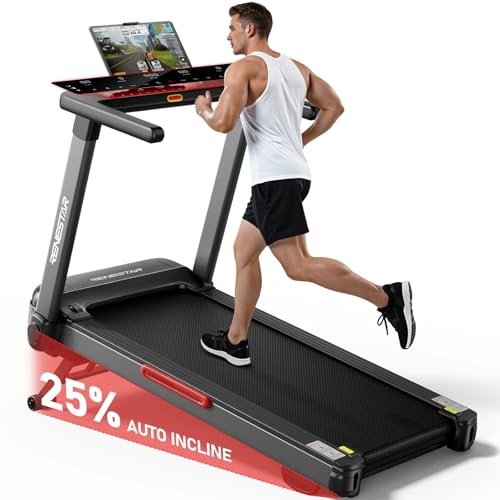
The Renestar home treadmill combines a 25% auto incline with a robust 3.5HP drive, enabling high-intensity incline sprint work. The spacious belt and multi‑program support provide a platform for sprint intervals, speed work, and tempo runs. An 8‑layer belt and a 19″ LED touchscreen facilitate quick access to programs and workout data. Bluetooth speakers add convenience for music during intense sessions. This model targets users aiming to mimic track-style incline sprinting while maintaining a home gym footprint.
Wildroot Organic Walking Pad With Incline And Handles

This compact walking pad focuses on portability and manageability for smaller spaces. It supports speeds from 0.6 to 7.6 MPH and features incline for added stimulus during lower-intensity runs. The handlebar design aids balance and safety, making it suitable for warm-ups, cooldowns, or light sprint‑interval work in constrained rooms. While not a full sprint treadmill, its incline capability helps replicate hill sprint mechanics when space is limited.
KALWOL 6‑in‑1 Foldable Treadmill With Incline And App

The KALWOL treadmill emphasizes versatility with a 6‑in‑1 design and 0.6–7.5 MPH speeds. Its 10% incline and foldable setup support sprint training and higher-intensity sessions at home. An 18‑year manufacturing heritage suggests durable construction and a focus on user-friendly controls, including handle integration for easier access during workouts. This model suits sprinters who want a balance of speed, incline options, and compact storage.
Cursor Fitness 16% Incline Small Walking Pad Treadmill

The Cursor Fitness model offers a 16% incline designed to intensify walking or light running, paired with a compact form factor. The 4-in-1 approach supports under-desk use, portable storage, and a native incline that can aid sprint-warmup protocols in small spaces. A 330 lb capacity ensures suitability for most home athletes performing interval sessions with incline elements. This option is best for sprinters prioritizing space-saving design without sacrificing incline-based training stimuli.
NordicTrack T 6.5 S Treadmill
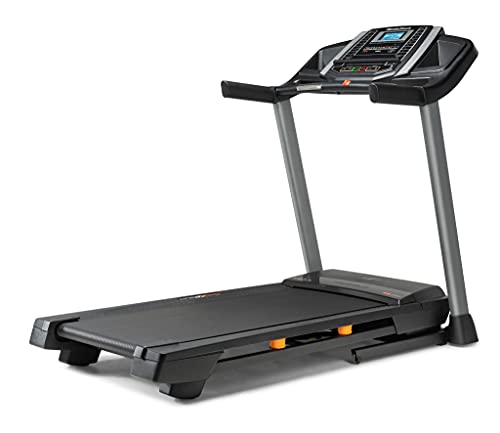
The NordicTrack T 6.5 S blends a space-saving design with incline capability and a 5″ display. It supports speeds up to 10 MPH and 0–10% incline, making it suitable for sprint-pace work, tempo runs, and interval training. Compatibility with fitness apps and iFIT provides guided workouts and scalable intensity levels. The SpaceSaver design helps fit a sprint-focused cardio routine into smaller home environments, while maintaining functional versatility for runners seeking track-like intensity at home.
Buying Guide: Key Purchase Considerations for Sprint Training at Home
- Speed range and acceleration: For sprinters, a treadmill that reaches at least 10 MPH with responsive acceleration is important. Curved non-motorized options demand more power from the user but can simulate sprint mechanics more authentically during interval sets.
- Incline versatility: Incline capability (preferably at least 10–15%) expands sprint training options, allowing hill sprints, tempo runs, and strength-focused workouts without overheating.
- Belt size and stability: A wide, long belt reduces ankle and knee stress during high-speed intervals. Look for durable, multi-layer belts with cushioned support for repeated sprint bouts.
- Durability and warranty: Sprint training is intense. Choose models with solid frame construction, reinforced rails, and a dependable warranty that covers motor and frame for several years if applicable.
- Space and storage: Home setups vary. Foldable and space-saving designs help preserve room. If using a curved non-motorized model, plan for floor space and room for safe deceleration after sprints.
- Programming and tracking: Built-in interval programs or app compatibility can streamline sprint workouts, enabling predefined sprint/walk cycles, pace targets, and performance analytics.
- Noise level and footprint: Some sprint-focused machines generate more noise under high load. Consider the environment and neighbor considerations when choosing between motorized and non-motorized options.
- Maintenance and service: Regular belt alignment, lubrication (if required), and user weight limits affect long-term performance. Check after-sales support in your region.
When selecting a treadmill for sprint-focused training, weigh the trade-offs between curved, self-powered models and traditional motorized treadmills. Curved treadmills emphasize technique and speed control through user effort, which can mirror track sprint mechanics but require more space and consistent effort. Motorized treadmills often provide easier control over pace, incline, and interval programming, supporting structured sprint workouts and progressive overload. Consider your available space, training goals, and preferred workout style to determine the best fit for your sprinting program.