Finding a reliable running partner on your wrist can boost training consistency and race-day performance. This guide highlights top GPS running watches designed for accurate pace, distance, and recovery insights. Each model below offers GPS tracking, health metrics, and workout planning to support runners at every level.
| Product | Brand | Model | Key Feature |
|---|---|---|---|
| Forerunner 55 (Black) | Garmin | Forerunner 55 | Daily suggested workouts, long battery life |
| Forerunner 55 Aqua | Garmin | Forerunner 55 | Water-friendly with GPS running metrics |
| Forerunner 165 (Black) | Garmin | Forerunner 165 | AMOLED display, recovery insights |
| Forerunner 265 (Black & Gray) | Garmin | Forerunner 265 | AMOLED display, extended battery, training metrics |
| Forerunner 255 Music | Garmin | Forerunner 255 Music | Music storage, GPS, long battery |
Note: All products listed feature built-in GPS to track pace, distance, and running routes, with additional health and training insights to help you optimize workouts and recovery.
Garmin Forerunner 55, GPS Running Watch — Black

The Forerunner 55 is an easy-to-use running watch that monitors heart rate at the wrist and uses GPS to log distance, pace, and route. It emphasizes daily suggested workouts to help plan training and race-day strategy. Battery life reaches up to two weeks in smartwatch mode and about 20 hours when GPS is active. Bluetooth connectivity enables syncing to compatible devices for quick data transfer and updates. PacePro provides GPS-based pacing guidance for a chosen course or distance, helping runners manage race strategy in real time.
Garmin Forerunner 55, Aqua Variant — GPS Running Watch
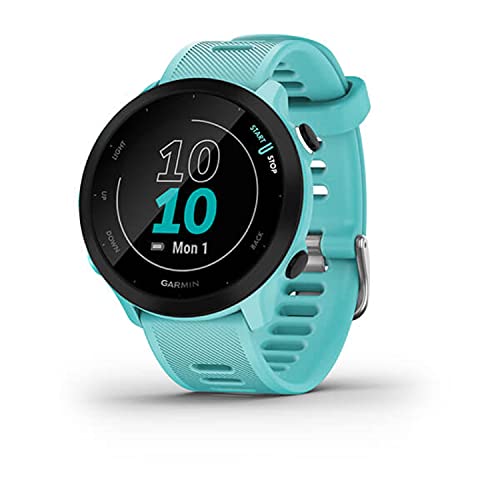
This variant maintains the core running and GPS tracking features of the standard Forerunner 55, including heart-rate monitoring at the wrist and PacePro pacing guidance. It is optimized for wearers who want a robust GPS watch with long battery life suitable for daily training and race preparation. The device supports smart features via Bluetooth and provides up to approximately two weeks of smartwatch mode battery life, with about 20 hours in GPS mode.
Garmin Forerunner 165, AMOLED Display — Black

The Forerunner 165 offers a colorful AMOLED touchscreen display for quick metric viewing and intuitive navigation. It combines built-in GPS with wrist-based heart rate, providing pace and distance data along with recovery insights to guide training decisions. With the watch face and controls designed for a lighter feel, this model aims for a balance between daily wearability and fitness tracking. Battery life extends up to 11 days in smartwatch mode and around 19 hours in GPS mode, depending on usage.
Garmin Forerunner 265, AMOLED, Training Metrics

The Forerunner 265 combines a bright AMOLED display with a 46 mm case and lightweight build. It delivers up to 13 days in smartwatch mode and about 20 hours in GPS mode. The watch emphasizes training metrics and recovery insights, with guidance via Garmin Coach and race adaptive training plans. It is designed to help runners monitor performance trends, sleep, and readiness while offering a sleek, modern look on the wrist.
Garmin Forerunner 255 Music — GPS Running with Music
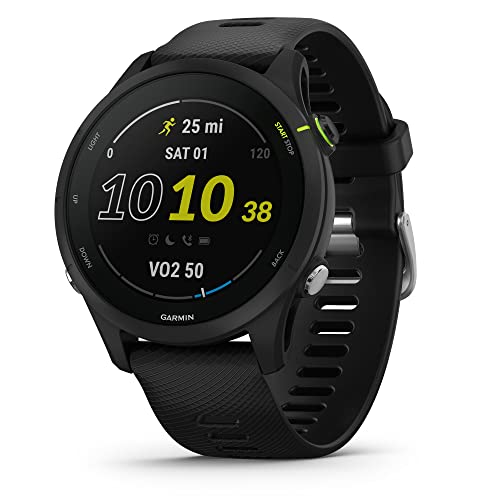
The Forerunner 255 Music extends standard GPS running metrics with music storage for up to about 500 songs and seamless playback with wireless headphones. It offers up to 14 days in smartwatch mode and up to 30 hours in GPS mode, providing a training companion that supports interval sessions, long runs, and recovery tracking. The music feature is ideal for runners who prefer to train without pulling out a phone for music access.
Garmin Forerunner 165, Whitestone AMOLED Display

This variant of the Forerunner 165 emphasizes a bright AMOLED display with widget-like insights. It includes built-in GPS for pace and distance, plus wrist-based heart rate monitoring. The watch is designed for daily wear with a balance of performance data and recovery metrics. Battery life supports extended training cycles, with up to 11 days in smartwatch mode and about 19 hours in GPS mode, depending on use.
Garmin vívoactive 5 — Health and Fitness GPS

The vívoactive 5 offers a bright AMOLED display and an all-around wellness focus alongside GPS running metrics. It delivers up to 11 days of smartwatch battery life and includes Body Battery energy monitoring, sleep insights, stress monitoring, and health coaching. This model emphasizes a full health picture, including HRV and sleep scoring, making it suitable for runners who want a holistic view of wellness and performance.
Buying Guide
Key purchase considerations for GPS running watches include GPS accuracy and lock speed, which affect pace and distance measurements on varied routes. Battery life remains critical for long training blocks and events; models vary from roughly 11 to 30+ hours in GPS mode, with smartwatch modes extending to days or weeks. Display quality matters for quick metric reading in sunlight; AMOLED screens offer vibrant visuals but may draw more power. Size and weight influence comfort during long runs, so consider wrist fit and button controls versus touchscreen navigation. Training features like PacePro, Garmin Coach, and adaptive training plans help structure workouts, while recovery tools (sleep, HRV, readiness) guide rest and progression. Music storage and smartphone integration add convenience for runners who prefer on-device audio or seamless data syncing. For multisport athletes or those tracking daily wellness, models with Body Battery and wellness widgets provide a broader health perspective.
Ultimately, the best GPS running watch balances accurate metrics, battery longevity, and training tools with personal preferences such as screen type, size, and whether music storage or phone independence is important. Review each model’s strengths—AMOLED displays for clarity, PacePro guidance for pacing, and recovery analytics—to choose a watch that best fits your routine and race goals.