Finding a rowing machine with a built-in screen can boost motivation by delivering real-time metrics, interactive workouts, and streaming courses right at home. This guide highlights top options with high-resolution displays, immersive data, and robust resistance systems. Each model offers distinct advantages—ranging from large rotatable touch screens to app-enabled coaching—so you can choose the best fit for space, budget, and fitness goals.
| Product | Brand | Screen Type | Max Load | Key Benefit |
|---|---|---|---|---|
| MERACH Pro-Grade Rowing Machines | MERACH | 21.5″ HD rotatable screen | 400 lbs | Real gym-level resistance with interactive courses and games |
| Merach Rowing Machines for Home | MERACH | LCD Monitor; App support | 350 lbs | Quiet, adjustable air/programmable workouts with data tracking |
| Concept2 RowErg Indoor Rowing Machine | Concept2 | PM5 Monitor | Not specified in listing | Wide app compatibility and proven reliability |
| Pooboo Magnetic Rowing Machine | pooboo | Large LCD monitor; Tablet holder | 360 lbs | Folding design with up to 14 resistance levels and data readouts |
| Sunny Health & Fitness SF-RW523021 | Sunny Health & Fitness | Console with data readouts | 300 lbs | Silent dual-rail system and 16 levels of resistance |
MERACH Pro-Grade Rowing Machines
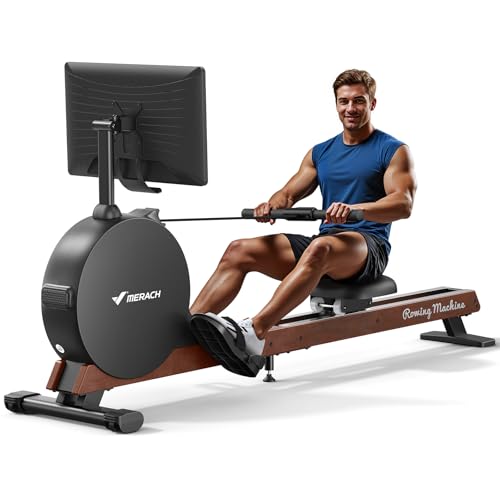
This MERACH model emphasizes screen visibility and interactive training. It uses a double power magnetic resistance system rated up to 130 pounds, enabling gym-like intensity at home. The 21.5-inch HD screen supports 180-degree horizontal and 60-degree vertical tilts, with mirror screen projection to synchronize course data in real time. Resistance adapts automatically during courses, reducing manual adjustments and keeping focus on form and breathing. The wooden tracks promise quiet, smooth gliding for apartment-friendly workouts.
YPOO Rowing Machine With App Support

The YPOO magnetic rower delivers a quiet workout with 99 pounds of resistance across 16 levels. Its heavy-duty steel frame supports up to 350 pounds and features a 46-inch dual slide rail for varied user heights. The machine is built for comfort and stability, with a secure grip handle, adjustable foot straps, and a water bottle holder. The product combines cardio and full-body conditioning in a compact footprint, suitable for apartments and shared living spaces.
Merach Q1S Rowing Machine
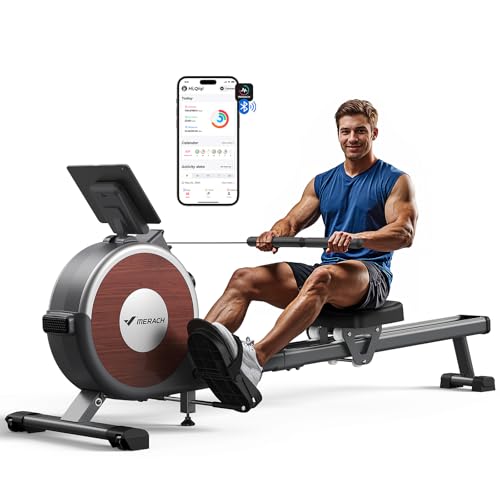
This MERACH model uses an LCD monitor with multiple courses and a dual-slide track for stability. The machine emphasizes quiet operation with a light footprint, and its 16 levels of resistance align with beginner to intermediate workouts. The built-in APP compatibility broadens training options, letting users follow guided routines and review workout data. The combination of smooth movement and accessible technology makes it a strong choice for home gyms prioritizing screen-based workouts.
Concept2 RowErg Indoor Rowing Machine
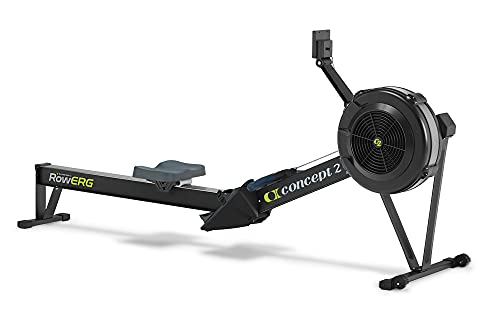
Concept2’s RowErg is a longtime staple for rowing enthusiasts. It features the PM5 monitor, which supports a wide ecosystem of apps and data analysis. The device is designed for easy storage and adjustable air resistance, delivering a smooth, low-impact workout. The PM5 console enables diverse training metrics and virtual courses, making it suitable for users who value data-driven progress and a robust app environment.
Buying Guide: Key Purchase Considerations
- Screen quality and interactivity: Large HD screens and rotating capability provide better visibility and immersive training. Look for tilt range, screen resolution, and the ability to mirror or stream courses in real time.
- Resistance type and range: Magnetic systems are common for quiet operation, while air resistance models offer broad, progressive intake. Match resistance with your goals—steady cardio vs. high-intensity intervals.
- Weight capacity and track design: Ensure the machine supports your body weight and allows comfortable stride length. Dual-track or longer rails improve stability for taller users.
- Noise and apartment suitability: Quiet operation matters in shared spaces. Mono-rail or dual-rail designs, plus flywheel construction, influence noise levels.
- Connectivity and data tracking: App compatibility and onboard monitors help track metrics such as distance, time, calories, pace, and heart rate. Look for Bluetooth or Wi-Fi features if you want to sync with health ecosystems.
- Storage and footprint: Folding designs and compact footprints are beneficial in small rooms. Check dimensions when folded or in use to ensure enough clearance.
- Maintenance and parts availability: Reputable brands with widely available parts reduce downtime and repair costs. Consider warranties and customer support.
In evaluating options, prioritize models with a high-visibility screen and adaptive resistance for a motivating, data-rich workout. For shared spaces, consider quiet operation and a folding design. If you value broad app ecosystems and proven reliability, a device with PM5 compatibility or strong app support is advantageous. Finally, assess real-world usage needs—space, budget, training style, and how interactive you want your workouts to be.