Getting started with road cycling means balancing performance, comfort, and ease of maintenance. The following five bikes are well-suited for new riders and urban commuters alike, offering dependable braking, reliable gears, and sturdy frames. Use this guide to compare features and choose a model that matches your goals, whether you’re cruising city streets or tackling gentle hills.
Summary of selected products:
| Product | Brand | Key Features |
|---|---|---|
| WEIZE Road Bike, 700C City Commuter | WEIZE | Caliper brakes; 700x28C wheels; high-carbon steel frame |
| Schwinn Fastback AL Disc Sora | Schwinn | Aluminum frame; 18-speed Sora drivetrain; carbon fork |
| VEVOR Road Bike 21 Speeds | VEVOR | Carbon steel frame; 21-speed Shimano; caliper brakes |
| Tommaso Imola Sport Bike | Tommaso | Aluminum frame; 24-speed Claris; beginner-friendly yet capable |
| Omelaza 21/14 Speed Road Bike | Omelaza | Lightweight aluminum; dual caliper brakes; 21-speed |
WEIZE Road Bike: City Commuter

The WEIZE road bike offers a lightweight dual caliper braking system designed for easy daily maintenance and consistent stopping power in diverse weather. Its 700x28C wheels help reduce rolling resistance and improve comfort on city roads, while a high-carbon steel frame provides stable handling and vibration absorption. The geometry aims to balance performance and comfort for urban commuting on mild mixed surfaces, making it a practical option for new riders who want reliability without complexity.
Key considerations: Caliper brakes are simpler than disc brakes, which can ease maintenance and reduce weight. The 700C wheels strike a balance between speed and stability for city streets. The frame’s steel construction favors a comfortable ride over rough pavement, but overall stiffness remains sufficient for everyday commuting.
Schwinn Fastback AL Disc Sora

The Schwinn Fastback AL Disc Sora is built on a lightweight aluminum frame with a carbon fork for responsive steering and reduced weight. It comes with an 18-speed drivetrain (Sora) for versatile gearing across varied terrain. This model fits riders roughly from 5’0″ to 5’4″ in a compact frame, making it a solid option for shorter riders seeking a capable road bike with ready-to-ride performance after assembly.
Key considerations: Aluminum frames deliver lightness and efficiency, while the carbon fork enhances ride quality. The Shimano Sora 18-speed setup helps beginners learn gear cadence without overwhelming options, and the bike’s sizing is important to ensure a comfortable reach and upright posture for new riders.
VEVOR Road Bike: 21 Speeds

The VEVOR road bike uses a carbon steel frame and a carbon steel front fork for a balance of durability and comfort. It features 700x25C wheels with a 21-speed drivetrain, ensuring smoother gear transitions on urban climbs and flats. A reliable caliper braking system provides controlled stopping power in varied lighting and weather, supporting confidence for beginner riders who want predictable braking performance.
Key considerations: Steel frames typically offer a forgiving ride but can be heavier than aluminum. The 21-speed setup provides ample gearing for gradual skill progression. Caliper brakes reduce maintenance complexity, though disc brakes can offer stronger stopping power in wet conditions—this model prioritizes simplicity and endurance for daily use.
Tommaso Imola Sport Bike
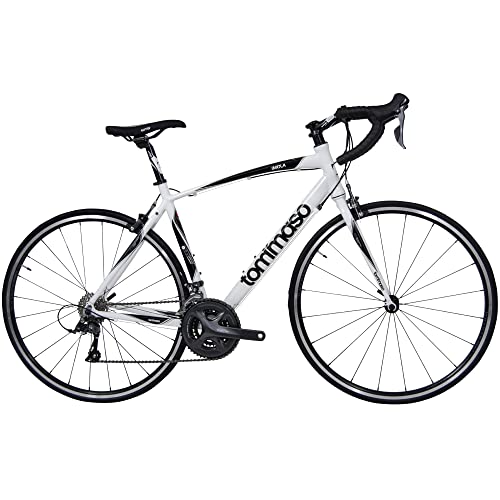
The Tommaso Imola is designed for riders seeking affordable performance with a performance-oriented frame. It features a 3×8 Shimano Claris drivetrain aimed at enabling climbing efficiency and speed on flats, while maintaining a reachable entry point for new cyclists. The bike includes a durable aluminum frame and robust components typically found on higher-tier models, offering a compelling option for riders who want room to grow without buying early on.
Key considerations: The Imola emphasizes performance while remaining accessible, with a note that assembly is required for warranty validation. The three-chainring setup can help beginners tackle varied terrain, but riders should be prepared for some initial setup work and potential upgrades as skills advance.
Omelaza 21/14 Speed Road Bike

The Omelaza road bike focuses on a lightweight aluminum frame coupled with dual caliper brakes for a balance of lightweight feel and braking reliability. It features a 21/14 speed transmission system (interpreted as a broad gearing range) to accommodate multiple riding scenarios, from city commutes to gentle hills. The dual caliper brakes help reduce weight while delivering quick stops in various conditions.
Key considerations: Aluminum frames typically provide a responsive ride with easier handling for new riders. The brake system’s simplicity supports straightforward maintenance. For riders anticipating more serious mileage, check chain and gear compatibility with local service options and consider routine tune-ups as needed.
Buying Guide: What to Consider When Choosing a Road Bike For Beginners
- Frame material: Aluminum is light and affordable, steel offers comfort and durability, while carbon fiber is lighter and stiffer but usually pricier. For beginners, aluminum or steel is often the best balance of cost and performance.
- Brakes: Caliper brakes are simpler and easier to maintain, ideal for new riders. Disc brakes provide stronger stopping power in wet conditions but can require more maintenance and cost.
- Gearing: A wider range helps with hills and flat stretches. Beginners may start with 16–24 gears, then progress to more as skills grow. Ensure the shifters are intuitive and easy to reach.
- Wheel size: 700C wheels are standard for road bikes and offer a good blend of speed and stability. Tire width (e.g., 23–28mm) affects comfort and grip; wider tires can improve confidence on rougher pavement.
- Fit and sizing: Ensure a proper frame size to maintain a comfortable riding posture. Shorter riders may benefit from smaller frames or bikes marketed for a smaller standover height.
- Maintenance and assembly: Some bikes require professional assembly for warranty claims. Check whether tools, setup instructions, and local shop options are readily available in your area.
- Intended use: Urban commuting versus longer weekend rides may dictate features like rack and fender compatibility, wheelset durability, and overall ride feel.
- Budget and upgrade path: Start with a reliable, purpose-built beginner bike and plan future upgrades (gears, brakes, components) as skill grows and riding frequency increases.