Finding the right physical therapy exercise bike can support knee, leg, arm, and overall rehabilitation while fitting into daily routines. Below is a curated selection of five under-desk, mini, and full-featured bikes designed for home use, with notes on versatility, resistance, and monitoring features. The list emphasizes low-impact workouts, portability, and ease of use for seniors, office workers, and active adults pursuing steady improvement.
| Product | Brand | Notes |
|---|---|---|
| Under Desk Bike Pedal Exerciser, MERACH | MERACH | Arm & leg use; resistance bands; app support |
| Mini Exercise Bike, Himaly | himaly | Arm & leg training; adjustable resistance; LCD display |
| Electric Physical Therapy Exercise Bike, ROYAXING | ROYAXING | Dual motors; adjustable resistance; leg support |
| Pedal Exerciser Bike, Dskeuzeew | Dskeuzeew | Full body modes; resistance bands; sturdy |
| RYGEO Pedal Exercise Mini Bike | RYGEO | Leg & arm cycling; portable; low intensity |
MERACH Under Desk Bike Pedal Exerciser Review

The MERACH under-desk bike combines versatility with compact design for arm or leg workouts. It supports table-top arm exercises and floor cycling while sitting, and it includes two resistance bands to target most upper-body muscles. A floor mat helps protect surfaces and stabilize the unit during use. The included MERACH app offers training modes, progress tracking, and live metrics, making it suitable for structured rehab or casual fitness sessions. The multi-use design makes it a practical option for mixed routines in small spaces.
Himaly Mini Exercise Bike With LCD Display
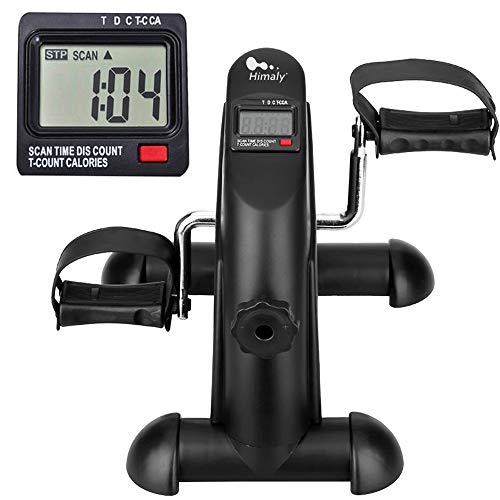
The Himaly under-desk pedal exerciser provides a combined arm and leg workout via adjustable resistance. Its design focuses on ergonomic use from a chair or desk, allowing users to switch between upper- and lower-body sessions. The digital LCD display tracks time, count, calories, and distance, with a scan feature to monitor multiple metrics in sequence. This makes it suitable for home or office routines and for individuals seeking simple, consistent progress monitoring during low-impact training.
ROYAXING Electric Rehab Bike With Leg Support

This motorized recovery bike offers 20 speed settings and dual motors to enable simultaneous or separate upper and lower-body training. The LCD touch screen provides workout stats for easy monitoring, and 15 levels of resistance plus a height-adjustable frame support users in different positions. A leg support adds stability for safe use during rehabilitation, making it a solid option for intensive rehab or progressive resistance training at home.
Dskeuzeew Pedal Exerciser For Total Body Rehab

The Dsqueuzeew pedal exerciser targets full-body rehab with independent modes for upper body, lower body, and resistance band training. It emphasizes comfort with foam-handled resistance bands and a sturdy, anti-slip frame designed to stay stable on various surfaces. The setup supports two people exercising together in some configurations, and it is positioned as a versatile option for improving joint mobility, strength, and blood circulation in a low-impact manner.
RYGEO Mini Pedal Exercise Bike For Home And Office

The RYGEO mini pedal exerciser focuses on leg and arm cycling at low intensity, suitable for knee and shoulder recovery post-surgery or for general movement improvement. It is designed for home and office use, enabling motion while watching TV or working. A tension-adjust knob allows users to set resistance for light exercise, providing smooth pedal motion ideal for daily rehabilitation and gentle strength work.
Buying Guide: Key Purchase Considerations For Physical Therapy Exercise Bikes
Choosing the right device depends on the user’s rehabilitation goals and environment. Consider these factors:
- Intended use: Determine whether you need arm-focused, leg-focused, or full-body workouts, and whether you require a motorized or manual unit.
- Resistance options: Look for adjustable resistance that suits different fitness levels and rehab stages. Some models offer resistance bands for upper-body work in addition to pedal resistance.
- Support and stability: A sturdy frame, anti-slip bases, and floor protection are important for safety, especially for seniors or those with balance concerns.
- Monitoring features: LCD or digital displays, workout metrics, and app integration help track progress and motivate adherence.
- Space and portability: For smaller spaces, under-desk or compact mini bikes save room; consider weight and portability for easy storage.
- Accessibility and ease of use: One-button controls, simple setup, and clear labeling are valuable for users with limited tech experience or seniors.
- Durability and materials: Look for rust-resistant frames and quality components to ensure long-term use and safe rehabilitation sessions.
- App and guidance: If training plans or guided workouts are important, prefer models with companion apps or online resources that complement rehab goals.
In summary, the best physical therapy exercise bike blends flexibility, safety, and user-friendly monitoring. Whether you need a compact under-desk model, a full-featured rehab trainer, or a multi-mode device for total-body therapy, the options above provide a range of capabilities and supports to fit various rehab paths and daily routines.