Whether you’re crossing coastal inlets, exploring calm bays, or staging a reliable tender for offshore trips, a capable inflatable boat can be a practical ocean companion. This guide highlights five well-rated models designed for stability, durability, and ease of use in coastal conditions. Each option features reinforced materials, multiple air chambers, and useful accessories to support safe, productive outings on the water.
Summary Of Chosen Models
| Product | Brand | Capacitiy | Weight Capacity | Key Features |
|---|---|---|---|---|
| Excursion 5 | Intex | 5-Person | 1,320 lb | Super-Strong PVC, dual Boston valves, extra bow/stern storage |
| Seahawk 3 | Intex | 3-Person | 790 lb | Triple air chambers, welded oar locks, motor mount option |
| Explorer 200 | Intex | 2-Person | 210 lb | Dual air chambers, welded oar locks, repair patch |
| 10ft Dinghy | Heyboard | 3-4 Person | Not specified | Drop-stitch floor, 1100 denier PVC, motor mount ready |
| Mariner 4 | Intex | 4-Person | 1100 lb | Triple air chambers, built-in rod holders, motor mount |
Excursion 5 Inflatable Boat Set

The Excursion 5 from Intex is built for roomy coastal adventures with a 5-person capacity and a high weight limit. Constructed with SuperStrong PVC, it offers notable resistance to impacts and abrasion, ideal for rougher ocean conditions. Dual Boston valves on the main hull enable quick inflation and fast deflation for on-demand setup or stowage. Additional bow and stern storage space helps organize dry bags, gear, and safety equipment. Stainless steel D-rings support secure anchoring and tie-downs during calmer offshore trips.
Explorer 200 Inflatable Boat
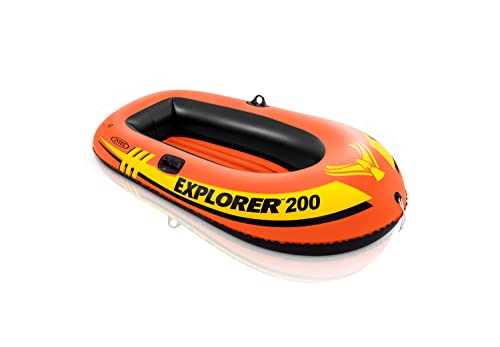
The Explorer 200 is a lightweight, two-person option with welded-on oar locks that provide secure rowing support. It features two air chambers with double valves, allowing faster inflation with potentially fewer steps. The included repair patch helps extend the boat’s life after minor punctures. This model suits calmer coastal waters where quick setup and straightforward handling are priorities.
10ft Dinghy With Drop-Stitch Floor
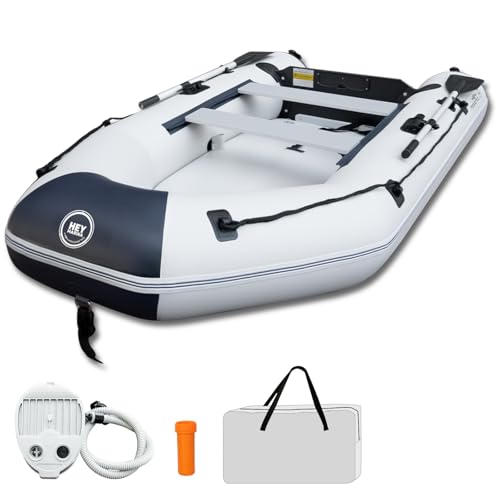
The 10ft inflatable dinghy from HEYBOARD emphasizes rigidity and portability. Its drop-stitch floor inflates to high pressure, offering stability while remaining significantly lighter than rigid alternatives. Constructed with the durable 1100 denier PVC, it resists punctures and UV exposure. A motor mount-ready design makes it a practical option for longer trips, fishing, or as a reliable tender for coastal boats.
Mariner 4 Inflatable Boat Set

The Mariner 4 combines a 4-person capacity with three air chambers and built-in fishing rod holders, supporting family outings or weekend coastal trips. The 54-inch oars, a motor mount fitting, and welded-on oar holders contribute to straightforward setup and flexible use, including potential motor-assisted cruising in protected waters. The boat’s construction encourages stability and versatility for various ocean-adjacent activities.
Buying Guide
Key considerations when choosing an inflatable boat for ocean use include capacity, stability, durability, and compatibility with outboard motors. A boat with multiple air chambers provides added buoyancy and safety in rough seas. Look for reinforced PVC, strong seams, and rapid inflation and deflation systems such as Boston valves. Oar locks and motor mount options add versatility for paddling or motor-assisted travel. Storage capacity and deck layout matter for carrying safety gear, life jackets, paddles, and coolers. Consider the weight of the boat for transport and how easy it is to inflate with the provided pump or a compatible high-output compressor.
Performance should be evaluated against the typical coastal environment you expect. For sheltered bays or calmer offshore waters, lighter, more portable models with quick setup can be advantageous. If you anticipate choppier conditions or longer expeditions, prioritize multiple air chambers, robust abrasion resistance, and a sturdy transom or motor-ready design. Accessibility features, such as grab lines and dual oar locks, improve safety and handling. Always verify the hull’s weight rating and ensure the chosen craft matches your crew size and planned activities, whether fishing, diving, or transport between vessels.
Maintenance and safety are also essential. Regularly inspect seams and valves for wear, store away from direct sunlight when not in use, and pack a basic repair kit. When using near saltwater, rinse components and lubricate moving parts to prolong life. In coastal regions, be mindful of local regulations regarding vessel registration and usage requirements. A well-chosen inflatable boat can deliver reliable performance across a range of ocean scenarios, balancing mobility with stability and safety.