When you’re chasing trophy lunkers on late-season ice, organization is as critical as edge and auger speed. A reliable ice rod case keeps rods, reels, tip-ups, and accessories protected from cold, moisture, and preparation mishaps. Below is a curated guide to five dependable ice fishing rod cases, each chosen for durability, storage capacity, and travel-friendly design. A quick product summary follows the introduction to help you compare at a glance.
| Product | Brand | Length | Key Benefit |
|---|---|---|---|
| Eagle Claw Ice Rod/Accessory Case | Eagle Claw | 43″ | Adjustable foam inserts for up to 6 combos |
| Flambeau Rod Bunk Box | Flambeau | Various lengths (2 x 65 ft sides, 2 x 6 ft center) | Bunk design keeps reels attached to rods |
| Vexan Ice Fishing Rod Case – 36″ | Vexan | 36″ | Holds up to 8 setups with tackle storage |
| MTM IFB-1-30 Ice Fishing Rod Box | MTM | Up to 8 rods | Secure latch design with multiple compartments |
| Otter Pro-Tech 40″ | OTTER | 40″ | Durable polyethylene case for harsh conditions |
Eagle Claw Ice Rod/Accessory Case — 43 Inch

The Eagle Claw 43″ case provides a compact solution for transporting multiple ice rod setups. Its 43″ length pairs with adjustable foam inserts to hold up to six ice combos securely. The foam inserts help minimize movement during transport, reducing the risk of line tangles or rod-eyes bending under impact. This case is well-suited for anglers who rotate through several rod/reel configurations and want a dedicated, organized container that fits easily into a sled or vehicle trunk.
Flambeau Rod Bunk Box — Portable Storage

The Flambeau Rod Bunk Box is designed to store multiple rods with reels still attached. The bunk design allows for reels to remain suspended and attached to the rods, while four foam inserts secure each rod. Capacity is flexible, supporting two longer rods on the sides and smaller rods in the center. This configuration is ideal for anglers who want quick access to a mixed kit without untying or rebuilding setups at the ice edge. The rugged latches and integrated handle enhance portability between the ice and vehicle or hut.
Vexan Ice Fishing Rod Case — 36″

The Vexan 36″ case is built for travel with a water-resistant denier shell and reinforced zippers. It features a four-channel padded layout and Velcro lock-downs to keep up to eight rod-and-reel setups organized and protected. Exterior pockets store tip-ups, lures, and tools, making it a strong choice for road trips or longer ice outings where quick access is a must. The hard-shell design helps endure cold, snow, and bumps along the way.
MTM IFB-1-30 Ice Fishing Rod Box
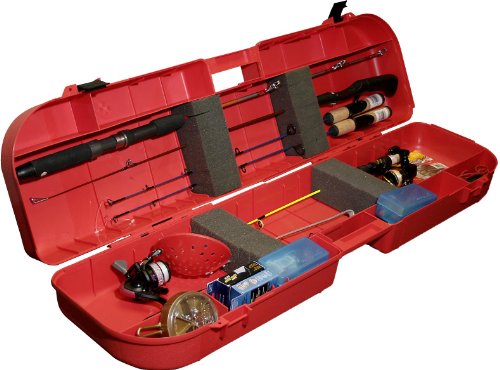
The MTM IFB-1-30 holds up to eight rods with space for tackle and tip-ups. It features four accessory compartments and notched foam padding to securely hold rods in place. A large, comfortable handle aids in carrying to and from the vehicle or ice shelter. This box is well-suited for anglers who need a robust, all-in-one transport solution that keeps gear organized for varied ice fishing days.
Otter Pro-Tech 40″ Deep Rod Case

The Otter Pro-Tech 40″ Deep Rod Case emphasizes durability with its polyethylene construction and a protective interior layout. Available in blue and black, this case is designed to withstand harsh ice conditions and resist impacts during transportation. At 40 inches, it’s a longer option that accommodates larger rod configurations while providing protection against moisture and cold. This case is a strong choice for anglers who demand rugged, year-round storage for their ice gear.
Buying Guide: Key Considerations for Choosing an Ice Rod Case
Selecting the right ice rod case involves balancing capacity, protection, portability, and price. Here are essential factors to consider from multiple perspectives:
- Capacity and layout — Consider how many rod-and-reel setups you typically carry, plus space for tip-ups, lures, and accessories. Look for cases with separate channels or foam inserts that minimize tangling and allow easy access on icy days.
- Protection against moisture and cold — A weather-resistant or water-resistant shell with padded interiors helps protect against condensation and impacts. Hard-shell or reinforced designs offer extra protection for expensive reels and fragile rod tips.
- Durability and materials — Polyethylene and denier shells are common for rugged use. Evaluate the durability of zippers, latches, and handles, especially if you transport gear over rough terrain or through snow and slush.
- Portability — A sturdy handle, shoulder strap, or integrated carrying system is important for lifting into sleds or vehicles. Consider whether the case fits in your sled, trunk, or gear racks.
- Size and compatibility — Match the case length to your longest rod, but remember that some designs accommodate multiple shorter rods as well. If you travel with long tip-ups or multiple setups, prioritize longer or modular layouts.
- Security and organization — Secure latching systems and interior dividers prevent movement during transit. External pockets or interior compartments help organize hooks, lures, and accessories for quick changes at the ice edge.
- Budget and value — Compare total capacity, protection features, and durability against price. A higher upfront investment can yield better long-term protection and fewer replacements due to damage.
- Maintenance and care — Some cases resist salt and moisture better than others. Look for easy-to-clean interiors and materials that resist corrosion from cold-weather use.
In practice, the best ice rod case should align with your typical trips: number of rods, distance to the fishing site, and whether you prefer reels detached or attached during transport. For anglers who frequently change between rod-reel setups or travel with a mix of rod lengths, a modular or multi-slot design offers the most flexibility. Fans of quick access might prioritize external pockets and fast-release latches, while those who fish in severe cold may emphasize thermal protection and moisture resistance.