Hydro treadmills and canine treadmills offer controlled, weatherproof exercise for dogs of all sizes. This guide highlights five reliable options that emphasize safety, durability, and user-friendly design for American households. Each product below includes a quick snapshot of its capabilities, so you can compare features at a glance and choose the best fit for your dog’s needs.
Summary at a glance:
| Product | Brand | Capacity (lbs) | Key Feature |
|---|---|---|---|
| Dog Treadmill, Slat Mill | HotFeed | Up to 250 | Three-level adjustable braking; weather-proof indoor use |
| Dog Treadmill For Large/Medium Dogs | Moysoon | Up to 300 | Non-electric self-driving design; hand brake for safety |
| Lifepro PawRunner | LifePro | Up to 130 | Ultra-quiet motor; remote control for easy adjustment |
| Albott Dog Treadmill | Albott | Up to 330 | Pace-adjustable hand brake; no motor for natural pace |
| Petbobi Dog Treadmill | Petbobi | Up to 265 | 360° display with remote; magnetic safety key |
Choosing a hydro treadmill or indoor dog treadmill involves weighing safety, noise level, ease of use, and how well the device supports your dog’s fitness goals. Below you’ll find five detailed product sections to help you compare design approaches, maintenance needs, and how each model handles daily use.
HotFeed Slat Mill For Medium Dogs

The HotFeed Dog Slat Mill is built with a fiberglass running belt designed for durability and reduced maintenance. Its three-level adjustable braking system provides customizable resistance, easy on/off access, and instant stopping—allowing handlers to tailor workouts to each dog’s needs. The design emphasizes safety with clear acrylic panels and secure side covers to protect paws while maintaining visibility of canine movements. The frame is carbon steel, offering long-term reliability, while lightweight rollers promote smooth operation. An incline adjustment feature lets you modulate intensity, making it suitable for dogs requiring progressive training or rehabilitation after injury.
Key considerations: The weather-proof concept supports year-round fitness indoors, protecting dogs from rain, heat, or winter cold. The lack of motor means the dog’s own pace largely determines speed, which can be ideal for training sessions that emphasize natural movement and endurance. This model is well-suited for medium-sized dogs up to 250 pounds, offering a balance of performance and straightforward setup for most homes.
Moysoon Canine Treadmill For Large/Medium Dogs

The Moysoon dog treadmill is designed for indoor exercise with weatherproof benefits and a non-electric, self-driving concept. The dog drives the track, and the speed is determined by the dog’s own pace, reducing the risk of overexertion. A handbrake provides instant speed control, and safety features include protective wheel hubs and sturdy rollers with smooth operation and reduced noise. This setup emphasizes user-initiated pace, which can be advantageous for dogs who need more control or accessibility as they learn to use a treadmill for the first time. It accommodates dogs up to 300 pounds, making it versatile for larger breeds while remaining approachable for medium dogs as well.
Key considerations: The non-electric design means less electrical maintenance but may require a period of dog acclimation to self-driven speed. The brake system is essential for quick stops during training, and the protective covers add an extra layer of safety for home use. Its compact footprint helps fit into smaller rooms, yet it remains robust enough for regular use with bigger dogs.
Lifepro PawRunner Dog Treadmill

The PawRunner by LifePro targets small to medium dogs with an emphasis on quiet operation. Its compact design makes it suitable for apartments or homes with limited space. An ultra-quiet motor minimizes noise disturbances, supporting a calmer environment for dogs that are sensitive to vibrations or sound. The treadmill includes a remote control that adjusts speed, enabling owners to tailor sessions without interrupting the dog’s focus. The product promotes healthier routines by enabling consistent daily exercise, which can aid weight management, cardiovascular health, and stress relief.
Key considerations: The PawRunner’s lighter duty capacity (up to 130 pounds) suits smaller or medium breeds, but it may be insufficient for very large dogs. Remote control functionality enhances convenience, and the quiet motor improves acceptance by canines that react to noise. Regular maintenance and belt checks help ensure longevity and performance in busy households.
Albott Indoor Dog Treadmill

The Albott treadmill emphasizes a pace-adjustable hand brake and a motorless design, encouraging dogs to set their own pace while maintaining safety controls for handlers. This approach supports a more natural gait and reduces mechanical stress on dogs who might be overwhelmed by motor-driven devices. The unit can accommodate dogs up to 330 pounds, making it a suitable choice for both medium and larger breeds. Its foldable, space-saving design plus roller wheels aids in mobility around the home and storage when not in use.
Key considerations: With no motor, the Albott model relies on the dog’s initiative, which can be beneficial for confidence-building and consistent training. The pace-adjustable brake aids in maintaining control during early sessions. For households with limited space or for owners seeking a quieter, low-maintenance option, this treadmill presents a compelling combination of capacity and flexibility.
Petbobi Dog Treadmill With Remote
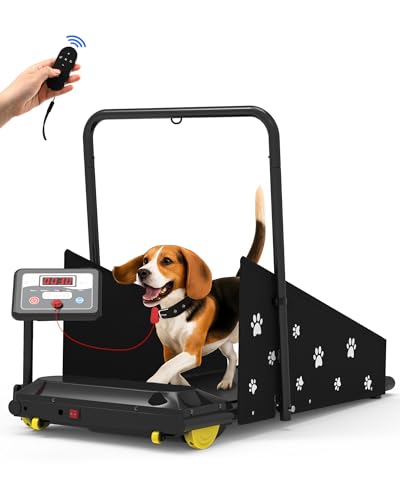
The Petbobi treadmill features a 360° rotatable display and a remote control, enabling owners to supervise and adjust workouts from multiple angles. It includes enclosed side panels for safety, a magnetic safety key to instantly stop the treadmill if needed, and a top leash ring for added stability during exercise. The unit is designed with a relatively quiet operation in mind, making it suitable for indoor use where noise could disturb family members or pets with sensitive hearing. Move wheels assist with repositioning within a living space or home gym setup.
Key considerations: The 360° display and remote control support hands-on management of sessions, which can help new users acclimate quickly. The magnetic safety key and secure side panels reduce injury risk during active workouts. The unit’s capacity up to 265 pounds covers many mid- to large-breed dogs, though you’ll want to confirm exact fit for your pet’s size and weight before purchasing.
Buying Guide: Key Purchase Considerations
- Purpose and environment: Indoor treadmills protect dogs from weather and dust, but ensure you have space to accommodate the unit and a safe floor surface to prevent slipping.
- Weight capacity and dog size: Match the product’s maximum weight with your dog’s current weight and growth projections. Larger breeds require sturdier frames and higher capacities.
- Drive mechanism: Motorized treadmills offer consistent speed, while non-motor or self-driven designs encourage natural pacing. Consider your dog’s temperament and training level when choosing.
- Safety features: Look for side panels, safety keys, and secure braking systems. A manual brake can be crucial for quick stops during training sessions.
- Noise and vibration: A quiet motor reduces stress for sensitive dogs and keeps household environments calm, especially in apartments or homes with open-plan layouts.
- Ease of maintenance: Check for belt durability, frame material, and accessibility for cleaning. Removable or foldable designs can simplify storage and upkeep.
- Remote and controls: Remote operation can be convenient for busy owners, but ensure the remote’s range, battery life, and readability work well in real-world use.
- Portability: If you anticipate moving the treadmill between rooms or transporting it, assess weight, wheels, and foldability.
- Training compatibility: Some models emphasize incremental incline or adjustable pace, which can aid rehab, weight management, or endurance building depending on your dog’s needs.
- Warranty and support: A solid warranty protects against early wear and common defects, especially for devices used regularly by growing or active dogs.
When evaluating options, compare not only price but also user feedback, maintenance requirements, and the degree to which a given model’s design supports safe, consistent training. The models described herein emphasize indoor use, safety features, and adjustable pacing, offering a range of approaches from motorless to remote-controlled, to best-fit different dogs and households.