The following selection focuses on proven aids and balls designed to reduce slice spin, improve alignment, and promote straighter, longer shots. From self-correcting balls to training aids and on-face grip aids, these products offer varied approaches to address slice challenges for both beginners and seasoned players. Below are five relevant options with quick-reference features to help you choose the right fit for your game.
| Product | Key Benefit | Ideal For |
|---|---|---|
| Polara Golf Self-Correcting Balls | Reduces hooks and slices by up to 75% with anti-slice technology | All skill levels seeking straighter shots |
| HoneyGolf HoneyStick Anti Slice Gel | On-face gel that promotes centered strikes for distance | Players who want quick, on-the-fly adjustments |
| HODL 21 FlightFix | Thin film reduces side spin for straighter, longer shots | Players who want a discreet, pocketable solution |
| MELE LINKS Golf Training Aid Ball | Impact training to fix slice and improve swing consistency | Beginners and pros improving contact |
| Giltiil Golf Slice Corrector | Inside-view slice correction to reduce slicing and topping | All ages and skill levels seeking a simple training aid |
Polara Golf Self-Correcting Balls: Straight, Soft Feel

Polara Ultimate Straight Self-Correcting Golf Balls are engineered to reduce hooks and slices by at least 75%. The unique dimple pattern converts unwanted spin into straight-backspin, helping golfers at all levels improve accuracy and control. The balls offer a soft feel for comfortable play and a balanced performance that supports consistency across various shot types. Ideal for players who want a straightforward way to counteract slice tendencies without changing their swing.
HoneyGolf HoneyStick Anti Slice Gel For Clubs

The HoneyStick gel is designed to optimize friction for centered strikes, enabling high ball speed, longer carry, and max sweet-spot contact. It is a no-mess application gel that fits in a pocket for quick touchups before tee time. The 1.7 fl oz bottle delivers thousands of uses across months of play, with a weather-resistant formula that performs in sun and humidity. A practical aid for on-course adjustments to reduce slicing tendencies.
HODL 21 FlightFix Anti-Slice & Anti-Hook Compound
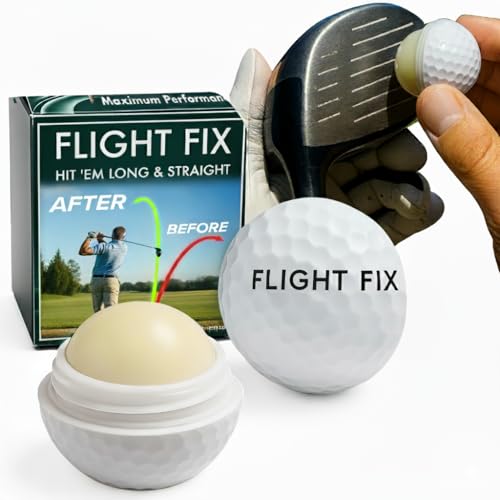
FlightFix applies a thin, uniform layer to the clubface to reduce surface friction at impact, minimizing gear effect to curb side spin. The product looks like a small golf ball and tucks easily into a pocket for discreet use. It supports straighter shots with less spin transfer, helping players achieve a more stable trajectory and longer carries without altering their swing mechanics.
MELE LINKS Golf Training Aid Ball

This impact practice tool helps fix slice and hook by improving arm connection and impact position. It is designed to build muscle memory for a more stable, repeatable swing and cleaner ball contact. Easy to use—attach the adjustable lanyard and begin practicing, making it suitable for both beginners and experienced golfers refining their swing mechanics.
Giltiil Golf Slice Corrector

The slice corrector is a portable, lightweight training aid designed to reduce slicing and topping. Made with durable ABS material, it is adjustable and built to last, including a rubber holder for mats or ground use. Suitable for both right- and left-handed players, it aims to help golfers visualize the proper swing plane and improve consistency.
Buying Guide: Key Purchase Considerations
- Goal alignment: Decide whether you want a self-correcting golf ball, a gel/compound on the clubface, or a training aid that builds swing mechanics. Each approach targets different aspects of the slice problem.
- Portability and ease of use: Pocket-friendly options like FlightFix and HoneyStick offer quick on-course fixes, while training aids require setup but can deliver broader technique improvements.
- Skill level and consistency goals: Beginners may benefit from self-correcting balls to learn alignment, while experienced players may prefer training aids that reinforce proper swing mechanics.
- Durability and longevity: Consider whether the product is designed for repeated use across seasons or intended for temporary, on-the-go adjustments.
- On-course impact: Some aids focus on spin reduction; others emphasize plane path or impact position. Choose based on which aspect you struggle with most.
- Regulatory considerations: Ensure any self-correcting or on-ball aids comply with your league or course rules if you play in organized events.
- Cost per use: Some products offer thousands of uses per bottle or pack, which can influence long-term value versus single-use solutions.
Researchers and players should consider combining multiple tools for a comprehensive approach to slicing. For example, using a self-correcting ball for practice alongside a training aid ball can reinforce correct swing mechanics while providing immediate feedback on impact. Always verify product details and adhere to usage instructions to maximize benefit and protect equipment.