If you’re pursuing strength gains and consistent progress in the gym, a dedicated fitness tracker or workout journal can help you log reps, track nutrition, and monitor body changes over time. The following selections are tailored for weight training enthusiasts, offering structured layouts to capture workouts, meals, and goals. Each option is designed to be portable, durable, and easy to use, whether you’re a beginner or a seasoned lifter.
| Product | Brand | Format | Key Focus |
|---|---|---|---|
| NewMe Fitness Journal for Women & Men | NewMe Fitness | Journal | Workout tracking, weight loss, muscle gain |
| Portage Fitness & Workout Notebook (3-Pack) | Portage | Notebook | Workout log, bodybuilding progress |
| SaltWrap Daily Fitness Planner | SaltWrap | Planner | Daily/weekly planning, nutrition, workouts |
| Ceiba Tree Fitness Journal | ceiba tree | Journal | Food and fitness tracking, wellness |
| NewMe Fitness Journal (Food & Workout) | NewMe Fitness | Journal | Nutrition and workouts, progress tracking |
NewMe Fitness Journal For Weight Training

The NewMe Fitness Journal is designed for both beginners and experienced lifters who want a structured way to log daily activities. It emphasizes goal-focused health coaching with space to track workouts for four to six months. The guided sections help users identify which exercises target specific muscle groups, making it easier to plan sessions and measure progress. A core feature is its ability to reveal what works and what doesn’t for a routine, enabling data-driven adjustments over time.
What makes this journal compelling for weight training is the balance between workout notes and progress insights. The layout supports logging sets, reps, weights, and rest periods while also offering prompts for weekly reflections on consistency, intensity, and recovery. For those pursuing muscle gain or weight loss, the journal provides a consolidated view of effort versus results, helping users stay accountable without overwhelming them with data.
Key points: durable binding, clear exercise-target guidance, and a practical 4–6 month logging window. The product is marketed as a fitness companion created with input from nutrition professionals and fitness experts, aligning with readers who seek credible, evidence-based planning. By maintaining consistent records, athletes can identify plateaus and set realistic next steps for strength improvements.
Portage Fitness & Workout Notebook (3-Pack)
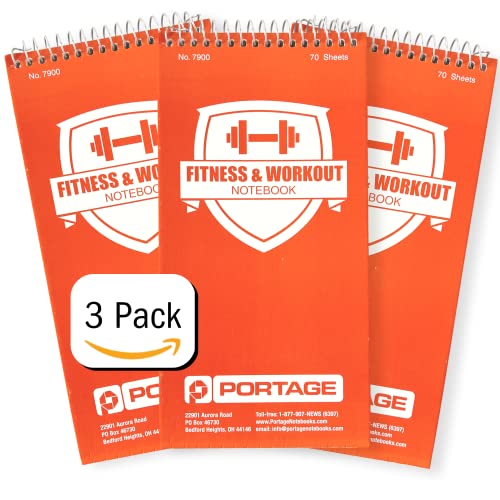
The Portage 3-pack offers a compact, portable way to track workouts and bodybuilding progress. With 4″ x 8″ dimensions, it easily fits in a gym bag or pocket, making on-the-spot logging practical between sets. The journals feature a sturdy .75mm thick cover for a stable writing surface, ensuring notes stay legible even in busy gym environments. Each pack includes 70 sheets, translating to more than 200 days of entries across all three volumes, which is ideal for users who want a long-term, cost-effective tracking solution.
From a strength training perspective, these logs provide straightforward sections for recording exercises, sets, weights, and reps, helping lifters monitor progression over time. The durable construction supports regular use, including travel, classes, or outdoor workouts. While compact, the notebooks still offer generous space for noting form, tempo, and special notes about workouts or equipment used.
Overall, Portage stands out for portability, durability, and value. The 3-pack format is convenient for those who train multiple days per week or want a separate log for different training phases. If you value a simple, no-fruss layout that keeps weightlifting progress front and center, this option is a solid fit.
SaltWrap Daily Fitness Planner

The SaltWrap Fitness Planner combines daily workout logging with nutrition tracking, offering a practical framework for weight training routines. Its daily and weekly pages help lifters set goals, monitor progress, and stay accountable with self-performance ratings. The planner emphasizes a holistic approach, guiding users to record workout details, plan sessions, and reflect on achievements. A strong feature is its nutrition tracking integration, which supports cohesive planning for both workouts and dietary choices.
Designed for both men and women, this planner accommodates a wide range of trainees—from beginners to seasoned weightlifters. The layout includes dedicated sections for goal setting, progress milestones, planning checklists, and self-evaluation, making it easier to identify strengths and areas for improvement. If your aim is to establish consistent habits while balancing nutrition, SaltWrap offers a balanced, user-friendly toolset for daily use.
Ceiba Tree Fitness Journal

The Ceiba Tree Food Fitness Journal blends daily food tracking with workouts in a compact 6.1″ x 8.5″ format. The hardcover spiral design provides durability for consistent daily use, with 132 pages across 61 days of entries. This format supports a steady cadence of logging meals, workouts, and progress, aiding users who want a clear snapshot of how nutrition aligns with training. The journal is marketed as suitable for weight loss and wellness goals, with broad applicability to general fitness routines and metabolic health tracking.
While primarily a combined food-and-fitness log, the Ceiba Tree notebook serves well for lifters who prefer a simple, readable interface. The slightly larger page real estate helps with detailed notes on exercises, tempo, and recovery. This option is helpful for individuals seeking a straightforward, no-fruss approach to day-by-day accountability in both nutrition and training.
NewMe Fitness Journal: Food & Workout

The NewMe Food & Workout Journal blends nutrition tracking with strength training logs, offering a comprehensive view of weight management and muscle-building progress. It targets long-term tracking with a two-month-plus horizon and includes dual-entry pages for simultaneous recording of workouts, body measurements, weight, and body fat. The layout supports detailed notes on exercises and max lifts, enabling users to assess what changes drive gains. This journal is built to help users understand how diet and training interact to influence body composition.
Key benefits include its focus on both performance metrics and dietary intake, making it suitable for lifters who want a synergistic approach to training and nutrition. The journal is designed to accommodate ongoing progress tracking with ample space for goals, attempts, and reflections. For athletes who prefer a structured, integrated log of workouts and nutrition, this NewMe option provides a coherent system to monitor progression over time.
Buying Guide: Key Purchase Considerations For Weight Training Journals
- Size and portability: Choose a format that fits your gym bag and daily routine. Smaller books are easy to carry, while larger ones offer more space for notes.
- Durability: Look for sturdy covers, spiral bindings, or hardcover options to withstand frequent use in gym environments.
- Logging sections: Ensure the planner includes dedicated spaces for exercise, sets, reps, weights, and rest. Some also offer nutrition and body measurements, which can be valuable for weight training goals.
- Progress metrics: Seek journals that help track progress over time, such as max lifts, body fat, and weight changes, to identify plateaus and plan progression.
- Guidance and prompts: Journals with prompts on muscle targeting, form, tempo, and recovery can improve consistency and results.
- Paper quality: Thick, smooth paper reduces bleed-through from markers and improves writing comfort during workouts.
- Price and value: A multi-pack or a journal that combines nutrition with workouts can offer greater long-term value for weight trainers.
- Audience alignment: Consider whether the journal is geared toward men, women, or general use, and whether it emphasizes weight loss, muscle gain, or overall wellness.
- Where to log: Decide if you prefer a daily planner, a workout diary, or a combination journal to match your training style and schedule.
These journals provide objective tools to monitor training consistency and outcomes. When selecting, prioritize formats that align with your training frequency, preferred metrics, and whether you want to emphasize nutrition alongside workouts. A well-chosen journal can support disciplined routines, help you spot improvements, and guide adjustments to your weight training program over time.