For bigger riders, choosing a fat tire bike means prioritizing stability, weight capacity, and comfort across diverse terrains. The following selections emphasize steel or high‑strength frames, wide 4-inch tires, and reliable braking systems to support riders who stand taller and weigh more. Each model below is linked to its Amazon listing for easy comparison, plus a quick snapshot of key specs to help you decide what fits best.
| Product | Frame & Tires | Notable Strength |
|---|---|---|
| Mongoose Dolomite Fat Tire Mountain Bike | Steel frame, 26″ wheels, 4″ knobby fat tires | Front and rear mechanical disc brakes |
| MarKnig 26″ Fat Tire Mountain Bike | High carbon steel frame, 4″ tires | Supports up to 440 pounds; 21‑speed transmission |
| Mongoose Malus Fat Tire Mountain Bike | Steel frame, 26″ wheels, 4″ tires | 7‑speed drivetrain; front and rear disc brakes |
| Max4out 26″ Fat Tire Mountain Bike | High‑carbon steel frame, 4″ tires, front suspension | 21‑speed drivetrain; front suspension for shocks |
| Mongoose Juneau Fat Tire Mountain Bike | Aluminum frame, 26″ wheels, 4″ tires | 16‑speed trigger shifters; versatile all‑terrain |
Mongoose Dolomite Fat Tire Mountain Bike
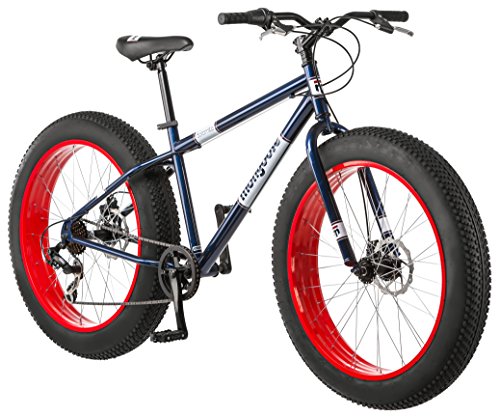
The Mongoose Dolomite combines an adult steel frame with 26-inch wheels and 4-inch knobby tires, designed to handle off‑road trails with ease. It’s described as adjustable for riders from about 5’4″ to 6′ tall, facilitating a comfortable riding posture for a broader range of heights. The bike’s weight is supported by sturdy alloy rims, while the threadless headset improves steering speed and overall performance. Front and rear mechanical disc brakes promote reliable stopping power in varied conditions, making it a solid entry in the big‑guy fat‑bike category.
MarKnig 26 Inch Fat Tire Mountain Bike

The MarKnig model uses a high‑carbon steel frame rated for riders up to 440 pounds and supports heights from about 5’5″ to 7’3″. Its 4-inch tires deliver improved traction on gravel, mud, and sand, which is essential for broader terrain versatility. A 21‑speed drivetrain offers broad gearing options to tackle hills or flat trails, while a dual braking system assists with precise stopping in diverse conditions. The combination emphasizes strength, stability, and adaptable performance for larger riders.
Mongoose Malus Fat Tire Mountain Bike
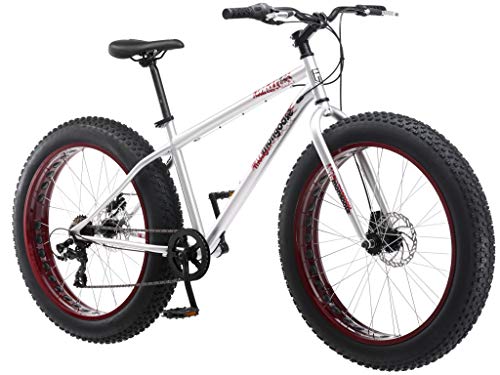
The Mongoose Malus brings a steel fat‑tire frame paired with 26‑inch wheels and 4‑inch knobby tires. It is designed for riders typically between 5’4″ and 6’2″ with a 7‑speed drivetrain for consistent shifts and easier climbs. Front and rear disc brakes provide reliable stopping power, contributing to safer handling across mixed surfaces. The model’s stability and braking performance align with needs common to larger riders seeking confidence on varied terrain.
Max4out 26 Inch Fat Tire Mountain Bike

The Max4out model emphasizes a high‑carbon steel frame paired with 4-inch fat tires and a 21‑speed drivetrain. Its front suspension helps dampen bumps on rough roads or trails, adding rider comfort during longer excursions. The reinforced frame design is aimed at delivering strong support for heavier riders, while the ergonomic geometry contributes to a more natural and controlled riding position on uneven ground.
Mongoose Juneau Fat Tire Mountain Bike

The Mongoose Juneau features a lightweight aluminum frame and 26×4 inch fat tires, designed for riders in the typical big‑guy range, roughly 5’4″ to 6’2″. It offers 16 speeds via trigger shifters for fast, precise gear changes, enabling efficient transitions across varying terrain. The frame geometry and brake setup support confident handling when riding on sand, snow, or rugged dirt trails.
Buying Guide
Key purchase considerations for fat tire bikes built for larger riders include frame strength, weight capacity, tire width, braking performance, and gear range. A robust steel or high‑strength aluminum frame with a weight rating appropriate for your body weight is essential. Wide 4-inch tires provide stability and float on soft surfaces, but require careful sizing to ensure pedal clearance and comfortable stance. Disc brakes—preferably mechanically actuated or hydraulic where available—offer reliable stopping power in wet or muddy conditions. A multi‑speed drivetrain (at least 7–21 speeds) helps tackle hills and varied terrain.
Other important factors include seat height adjustability, stem length, and handlebar reach to accommodate leg and torso length for a comfortable riding position. Front suspension or lockout options can improve comfort over rough terrain, while alloy rims minimize overall bike weight without sacrificing durability. Finally, consider the rider’s typical use: off‑road trails, beach or snow conditions, and daily commuting. If planning long rides, look for models with easier maintenance and readily available replacement parts.
Comparative notes for big‑guy fat bikes: steel frames generally offer greater weight capacity and resilience, while aluminum frames reduce overall weight for easier maneuverability. Brakes with robust stopping power are critical in wet or downhill scenarios. For riders weighing closer to the upper limits of capacity, prioritize models with reinforced frame geometry and higher gear ranges to maintain efficient cadence on climbs. Accessibility to parts and service in your region can also influence long‑term satisfaction and ownership costs.