For individuals who rely on seated cardio, choosing an exercise bike that prioritizes stability, comfort, and easy adjustments is essential. The following curated selections focus on low-impact, chair-friendly designs with solid weight capacities, adjustable seating, and quiet operation. Each model supports apps or interactive features to help maintain motivation and track progress, while prioritizing safety and accessibility in home settings.
| Product | Brand | Weight Capacity | Type | Notable Feature |
|---|---|---|---|---|
| Exercise Bike, Adjustable Magnetic Resistance Stationary Bike | SLUNSE | 350 lbs | Upright | App compatible; adjustable seat and handlebars |
| Recumbent Exercise Bike for Home | Birdfeel | 400 lbs | Recumbent | Ergonomic backrest; ultra-quiet; easy mobility |
| pooboo Folding Exercise Bike | pooboo | — | Foldable Upright | 4-in-1 with arm resistance bands |
| Caromix Folding Exercise Bike | JELENS | 330 lbs | Foldable Upright | 5-in-1 with arm bands; mobile device stand |
| MERACH Exercise Bike | MERACH | 300 lbs | Upright | Exclusive app support; quiet belt drive |
Below are five carefully chosen models that balance accessibility, stability, and exercise versatility. Each section provides key features, setup considerations, and how the bike aligns with seated or semi-reclined cardio goals. The selections emphasize stability, ease of use, and reliability in home environments.
SLUNSE Exercise Bike With App Compatibility

The SLUNSE bike is built for durability with a thick aluminum-steel frame and a curved rear base that minimizes wobble on varied floor surfaces. It features a 35-pound flywheel, dual brake knobs, and five adjustable feet pads to stabilize the unit in a home setting. The seat is highly adjustable, and the 2-way handlebar plus 4-way seat adjustability support a wide range of user heights from roughly 4’8″ to 6’1″. For paraplegic or limited-vehicle users planning seated workouts, this model offers a steady, low-impact cardio option with smart connectivity via fitness apps, enabling interactive routes and virtual training experiences.
Key considerations: ensure accessible mounting height, verify chair compatibility, and consider app-based programs for guided workouts. The heavy-duty construction contributes to long-term reliability in shared living spaces. Look for easy-access display and transport options if moving between rooms is needed.
Birdfeel Recumbent Exercise Bike For Home

Birdfeel’s recumbent design prioritizes comfort with a plush padded seat and ergonomic backrest. Its lever-based seat adjustments allow easy fore-aft movement to accommodate different user heights, making it suitable for households with multiple users or caregivers assisting. The 10-pound flywheel and magnetic resistance deliver a quiet, smooth ride while supporting up to 400 pounds. Quick setup, 85% pre-assembly, and built-in transport wheels add practical convenience for rearranging a living space. This model is well-suited for low-impact cardio and rehabilitation routines conducted from a seated position.
Key considerations: recumbent bikes reduce hip and knee strain and typically offer easier mounting. Quiet operation supports shared living spaces and early- or late-evening workouts. Ensure seat dimensions and backrest fit the user’s torso length and posture needs for maximum comfort.
pooboo Folding Exercise Bike 4-In-1

The pooboo 4-in-1 folding bike offers upright posture with a foldable, space-saving design. An added benefit is the included arm resistance bands, which enable upper-body engagement alongside leg work—useful for comprehensive seated workouts. A bottle holder encourages hydration during longer sessions, and transport wheels simplify room-to-room mobility in compact living areas. The 8-level magnetic resistance accommodates a range of intensity while maintaining quiet operation, making it a practical option for apartments or shared homes where space is a priority.
Key considerations: folding design can affect seat and frame stiffness over time; confirm maximum user weight if planning regular high-intensity sessions. The integrated accessories add versatility for upper-body training in seated or semi-reclined positions.
Caromix 5-In-1 Folding Exercise Bike
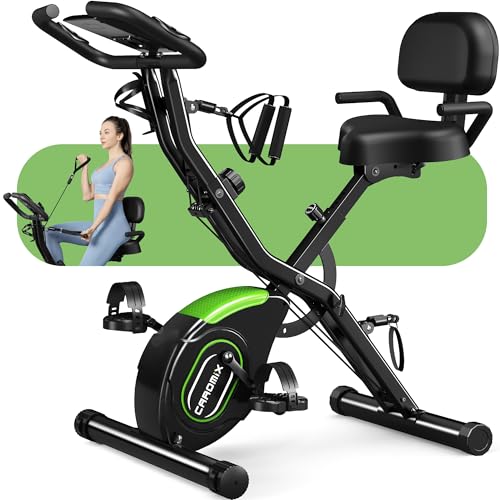
Caromix presents a 5-in-1 design allowing upright, semi-reclined, or seated positions, with an included arm resistance band to target upper-body muscles during low-impact cardio. A built-in LCD monitor tracks time, distance, calories, speed, and heart rate, helping users manage progressive goals from a seated position. A mobile device stand supports streaming workouts or courses while cycling, and the robust steel X-shaped frame handles a substantial load for confident use in home gyms. The quiet magnetic resistance keeps operation unobtrusive in shared spaces.
Key considerations: test seat ergonomics for comfort in prolonged sessions, and assess if the stand height aligns with device viewing angles. Folding mechanics should be inspected to ensure smooth operation and durability under frequent use.
MERACH Exercise Bike With App Support

MERACH pairs a quiet belt-drive system with exclusive app compatibility, including Kinomap and Zwift. It supports real-time metrics with a sleek LED display and syncs to fitness platforms for integrated tracking across devices. With a 300-pound capacity and adjustable seat, the design leans toward seated or semi-reclined use, offering a reliable cardio option in a home setting. The bike’s endurance-friendly construction and app ecosystem enable structured programs or virtual rides that accommodate varying mobility needs while controlling session intensity precisely.
Key considerations: verify app availability and device compatibility, especially for accessibility needs. A quiet ride reduces disruption in shared homes, and reliable tracking helps measure progress for rehabilitation or general health goals.
Buying Guide: Key Purchase Considerations
- Seating comfort and adjustability: For paraplegia or limited mobility, seats with ample padding and multi-axis adjustments (fore-aft, height) support proper posture and long sessions.
- Stability and frame design: Look for triangular or reinforced frames and wide base stabilization for reduced wobble on uneven floors. Weight capacity matters for safety and future-proofing.
- Type of resistance: Magnetic resistance offers smooth, quiet operation with low maintenance; belt drives further minimize noise compared to other drive types.
- Accessibility and mounting: Recumbent and folding models can ease mounting and storage. Ensure there are accessible steps or low mounting heights when needed, and consider transport wheels for rearranging spaces.
- Digital integration: App compatibility or built-in displays help track metrics, provide guided workouts, and enable virtual classes. Check device compatibility and data privacy policies.
- Device storage and accessories: Built-in bottle holders, tablet stands, and resistance bands add value for comprehensive seated workouts and hydration during sessions.
- Quiet operation: For shared living spaces or late workouts, prioritize models with belt drives and well-balanced flywheels to minimize noise.
- Maintenance: Materials and finish, such as rust protection and sealed components, influence long-term durability in humid or busy home environments.
- Assembly and support: Consider level of assembly required and availability of customer support or spare parts in case of wear or failure.