Electric skateboards with strong hill-climbing ability let riders tackle steep neighborhoods, hillside commutes, and scenic climbs with confidence. The following picks focus on models that deliver robust motor power, solid range, and stable handling on inclines. Each option below includes key performance details drawn from real product specifications to help you compare traction, speed, and battery life for hills-based riding. Whether you’re a beginner conquering your first grade or a rider upgrading to more serious terrain, these boards cover a range of budgets and capabilities.
| Product | Brand | Top Hill-Climb Capabilities | Link |
|---|---|---|---|
| Dnaskate V4 Electric Skateboard | DNASKATE | 2×500W hubs, up to 28 mph, climbs 30% inclines | Amazon Page |
| DNASKATE M8 Electric Skateboard | DNASKATE | Integrated body, 400W hub motor, 14° climbing angle | Amazon Page |
| Dnaskate V20 Electric Skateboard (V20-120mm Cloud Wheel) | DNASKATE | 2×500W hubs, up to 28 mph, 30% incline, 22 miles range | Amazon Page |
| MEEPO Ampboard Electric Skateboard | Meepo | Lightweight, 14MPH, 25KM range; stable low-to-ground ride | Amazon Page |
| EBOSSOM Electric Skateboard ES6 SE | EBOSSOM | 350W motor, 6-8 miles range; 10 mph top speed | Amazon Page |
Note: The table highlights core hill-climb capabilities as described by each manufacturer. Actual performance can vary with rider weight, terrain, tire choice, and battery condition.
Dnaskate V4 Electric Skateboard
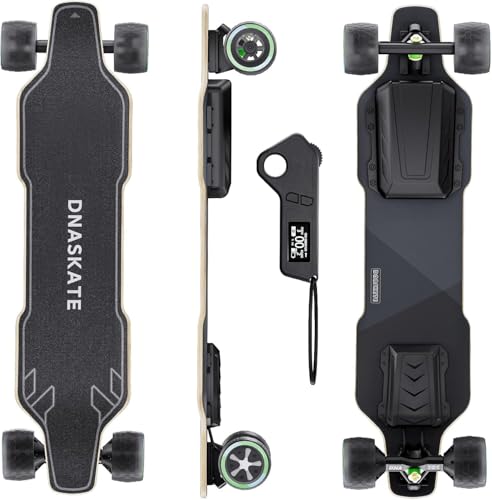
The Dnaskate V4 packs two 500W hub motors for strong hillside performance, delivering speeds up to 28 mph and the ability to tackle inclines up to 30%. The design emphasizes quiet operation and low maintenance, making it suitable for riders who want reliable power without frequent upkeep. A 288Wh battery supports a practical 22-mile range, providing enough distance for longer hills or mixed terrain rides. Four gears let beginners start slow and advance as confidence and skill grow, ensuring a scalable learning curve for uphill routes.
DNASKATE M8 Electric Skateboard

The M8 model emphasizes an integrated body with battery housed internally and increased ground clearance, aiding performance on rugged terrains. Weighing about 11.5 pounds and featuring a 28-inch deck with a kicktail, it blends portability with practical riding geometry. Its 400W brushless hub motor provides reliable propulsion, reducing mechanical complexity compared with belt-drive setups. The remote supports up to a 14° climbing angle, enabling efficient ascent on varied slopes while maintaining ease of use for riders of different skill levels.
Dnaskate V20 Electric Skateboard (Cloud Wheel)

The V20 version combines high performance with extended range. Powered by 2×500W hub motors, it reaches up to 28 mph and climbs 30% slopes, mirroring the V4’s power profile while adding a 22-mile battery range. The 120mm Cloud Wheel tires are designed for superior shock absorption and grip, enhancing stability on uneven urban hills and rough pavement. An LCD remote provides real-time ride data and easy gear switching across four speed modes for precise hill control.
Meepo Ampboard Electric Skateboard

The Ampboard is designed for everyday riders who want a compact, lightweight board with reliable stability. At roughly 11.4 pounds and a long deck, it’s easy to carry and maneuver, making it suitable for commuters facing brief hills during a route. A 540W hub motor provides steady acceleration, while the board’s low, wide stance helps maintain confidence on climbs. The included protection and ergonomic remote enhance overall control for riders new to steeper terrain as well as seasoned enthusiasts seeking a lighter option for hillier trips.
EBOSSOM Electric Skateboard ES6 SE

The EBOSSOM ES6 SE targets younger riders and beginners who want a gentle introduction to hill-friendly riding. With a 350W motor, the board manages steady acceleration and simple throttle control ideal for developing confidence on gentle slopes. A short-range battery supports six to eight miles per charge, making this model well-suited for short commutes or weekend hill sessions. The straightforward remote and four-speed options help riders gradually increase their comfort level with elevation gains.
Buying Guide: Key Purchase Considerations For Hill Climbing
- Motor power and torque: For hills, prioritize boards with dual 500W hubs or higher (or high-torque belt options if available). Higher wattage supports steeper climbs and stable acceleration on inclines.
- Battery capacity and range: A larger battery (often 288Wh or more) supports longer climbs and reduces the need for charging on multi-stop routes. Look for 20+ miles of range if you plan frequent uphill rides.
- Wheel size and grip: Larger wheels (120mm or 90mm Cloud Pu/PU varieties) improve shock absorption and grip on rough uphill surfaces. Consider tires with anti-slip treads for added safety on hills.
- Weight and portability: If you’ll carry the board up climbs or stairs, lighter boards (around 11–12 pounds) are easier to manage, though may trade some climb power.
- Remote and safety features: LCD remotes, cruise control, and reliable braking are essential for uphill confidence. Look for four-speed modes to dial in appropriate torque and speed on different grades.
- Terrain suitability: For urban hills with rough pavement, consider boards with higher ground clearance and stable decks to avoid bottoming out on ramps and potholes.
- Maintenance considerations: Hub motors are generally low-maintenance and quiet, but ensure compatible charging practices and inspect for any gear wear after frequent climbs.
- Rider weight and skill level: Heavier riders may require boards with stronger torque and higher-grade motor performance. Beginners should start with lower gears and gradual incline steps to build technique.
- Safety gear and rider education: Always pair hill-focused boards with helmet, knee pads, and wrist guards. Practice in a safe area before tackling long climbs or steep grades.