Discover top air-treadmill options designed for rehabilitation and gentle, low-impact training. These machines emphasize shock absorption, incline versatility, and quiet operation to support mobility recovery and safe home workouts. Below is an overview of five units that balance comfort, support, and performance for rehab needs.
| Product | Brand | Key Benefit |
|---|---|---|
| Hccsport Walking Treadmill | Hccsport | 16% incline with intelligent air cushioning |
| ApexNexus Treadmill With Incline | ApexNexus | 8% manual incline, compact design |
| Body-Solid Endurance T50 | Body-Solid | Low-impact rehab with wide belt and safety features |
| AoraPulse Foldable Treadmills | AoraPulse | Quiet 3.0 HP motor, folding for space |
| RUNOW Curved Treadmill | RUNOW | Non-motorized curve for controlled, low-impact work |
Hccsport Walking Treadmill With Auto Incline And Air Cushioning

The Hccsport treadmill supports rehabilitation with an 18-level auto incline, from 0% to 16%, simulating varied elevation to ease back and leg workouts. Its Intelligent Air Cushioning System adjusts air pressure under the deck to maximize shock absorption, reducing joint impact during movement. A dual-motor design enables speeds up to 10 mph and smooth incline transitions for progressive rehab programs. This model also tracks pulse sensors to help monitor heart rate during sessions, contributing to safer training for rehab patients.
ApexNexus Treadmill With Incline 3-in-1
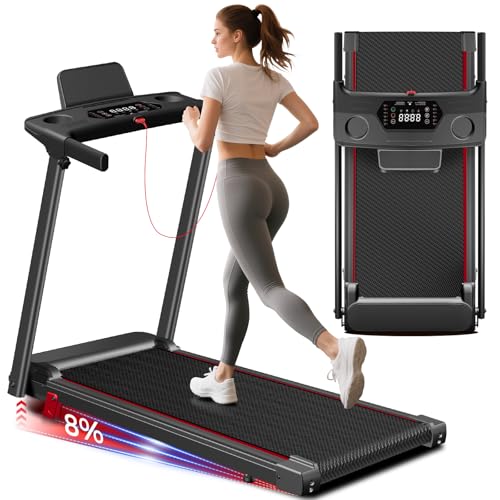
This portable walking pad offers an 8% incline option to simulate hill training while remaining compact for small spaces. With a 3.0 HP brushless quiet motor and a weight capacity up to 300 lbs, it provides a stable platform for rehab walks and light jogs. The LED display includes smart memory to resume where you left off, making it useful for structured rehab plans that require rest periods. A sturdy design supports safe use at home or in a clinic setting.
Body-Solid Endurance (T50) Rehab Walking Treadmill
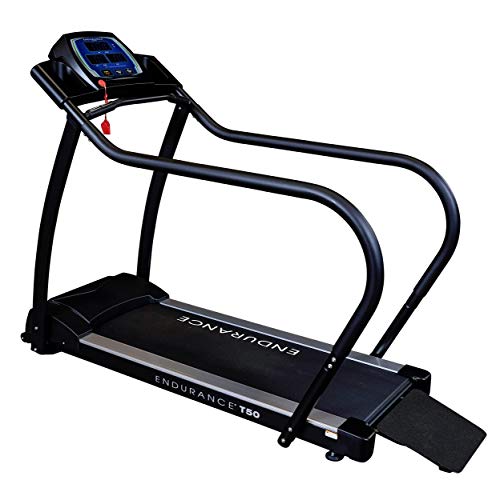
Designed for injury rehab and low-impact walking, the Body-Solid Endurance T50 emphasizes safety and accessibility. It features a wide belt, a slow starting speed (0.1 mph) with gradual increases up to 5 mph, a 1.5 HP motor, and a belt-entry rear ramp with padded handrails for easy mounting. An emergency stop cord adds an immediate safety measure, valuable for patients with mobility concerns. The treadmill is supported by a legacy of reliability, making it a solid choice for clinics and home rehab setups.
AoraPulse Portable Foldable Treadmill For Home

This foldable treadmill by AoraPulse combines a 3.0 HP motor with a weight capacity of up to 300 lbs and a quiet operation profile, making it suitable for rehab exercises in home or small office spaces. The LED display tracks standard metrics, and the foldable design supports easy storage between sessions. It’s designed for low- to mid-intensity workouts, aligning well with recovery training plans that require consistent, controlled movement.
AoraPulse 3.0 HP Foldable Treadmill (Alternative Model)

This second AoraPulse option mirrors the 3.0 HP foldable design with a similar load capacity and quiet operation, offering flexibility for rehab programs that require either the same setup or a slightly different form factor. The LED display, pre-set programs, and compact folding mechanism support home rehab routines by enabling predictable, repeatable workouts with easy storage after use.
RUNOW Curved Treadmill For Controlled Rehab

The RUNOW curved, non-motorized treadmill provides a controlled, low-impact workout ideal for rehab settings. Its curved design requires self-propelled movement, which can help patients build stabilizing muscles with reduced joint stress. A sturdy steel frame and strong belt support up to 450 lbs offer reliability for varied rehab programs. The LCD display shows essential metrics, and the lack of motorized components minimizes noise and maintenance concerns in clinical or home environments.
Buying Guide: Key Rehab-Focused Purchase Considerations
- Impact reduction and cushioning: Prioritize models with air or advanced cushioning to minimize joint stress during walks and light runs. Look for adjustable cushioning or variable incline to tailor impact levels.
- Incline and ramp options: Gradual incline capabilities help simulate real-world terrains and support progressive therapy. Manual or automatic incline can influence ease of use for different rehab stages.
- Motor noise and stability: Quiet motors reduce disruption in home environments. A stable deck with wide belt width and low step-in height supports safe entry and reduces fall risk during rehab.
- Safety features: Emergency stops, handrails, non-slip belts, and easy-access controls are essential for patients with limited mobility or balance challenges.
- Monitoring and data tracking: Pulse sensors, heart-rate monitoring, and onboard displays help clinicians and patients track progress and adjust programs safely.
- Space and storage: Foldable designs and compact footprints are beneficial for homes or clinics with limited space. Consider wheeled for easy relocation.
- Maintenance and durability: Look for durable frames, simple maintenance requirements, and reliable warranties to support long-term rehab use.
- Weight capacity and accessibility: Ensure the model supports the user’s weight and offers features like easy-entry ramps or accessible belt heights for safer transitions.
- Program variety: A mix of pre-set programs and manual controls supports varied rehab protocols, from gentle gait retraining to more active cardio sessions.
In rehab contexts, selecting a treadmill with cushioned support, safe entry, and predictable performance is crucial. The options listed above provide a spectrum from motorized, cushioned machines to non-motorized curves, enabling therapists and individuals to tailor rehabilitation routines to specific medical guidance and recovery stages.